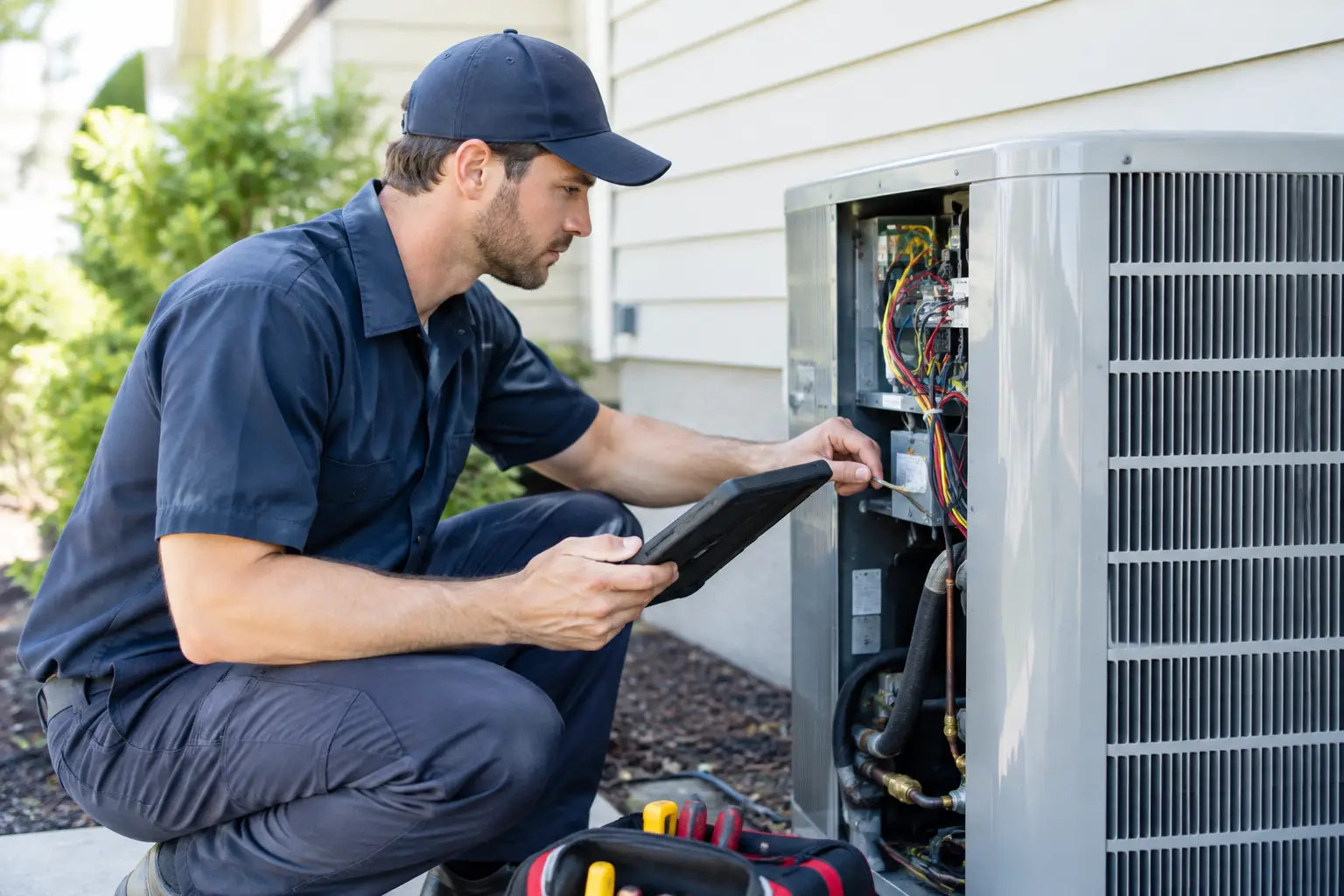
A callback is rarely just a return trip. It is a schedule disruption, unpaid drive time, a frustrated customer, and pressure on the technician who handled the first call. Most HVAC callback causes are not mysterious equipment failures. They are gaps in diagnosis, verification, communication, or installation details that can be controlled in the field.
The goal is not to blame technicians for every repeat visit. Some failures are intermittent. Some customers report a new issue that was not present during the original call. The practical goal is to identify patterns, give techs a repeatable process, and make the first repair more reliable.
Why callbacks cost more than the labor time
A callback can consume an open service window that should have gone to a new customer. It also creates uncertainty. The office may not know whether the issue is a warranty repair, a missed diagnosis, a customer education problem, or an unrelated failure.
For the technician, repeat calls can encourage rushed work if the team treats every callback as a personal failure. That is the wrong lesson. A better response is to review the facts: What was reported? What was tested? What changed after the repair? What was verified before leaving? Clear answers turn callbacks into useful problem-solving data.
The most common HVAC callback causes
1. Replacing a part before finding the reason it failed
A failed capacitor, contactor, fuse, blower motor, or control board may be the result of another problem. Replacing the failed component can restore operation for a few hours or days, then the customer calls again because the root cause remains.
A capacitor may be stressed by a weak condenser fan motor. A blown fuse may point to a shorted wire or compressor circuit. A failed board may have been exposed to voltage issues, moisture, or a wiring error. Before installing the part, test the conditions that could damage its replacement.
This does not mean every service call requires an extended investigation. It means the repair decision should match the evidence. When symptoms, electrical readings, and equipment operation do not agree, slow down before calling the diagnosis complete.
2. Skipping a complete operating check
Some systems appear fixed as soon as a component is replaced. But a call for no cooling is not fully resolved because the outdoor unit started. The system needs to operate long enough for the technician to confirm the repair under normal conditions.
Check the call for cooling or heating from the thermostat through the final equipment response. Confirm blower operation, outdoor fan operation, temperature split when applicable, drain performance, safeties, amperage, and refrigerant circuit behavior. The exact checks depend on the equipment and complaint, but the process should go beyond “it turned on.”
A final operating check catches problems such as a blower set to the wrong speed, a drain that backs up after a few minutes, a low-voltage connection that drops out, or a system that trips on pressure after the technician leaves.
3. Incomplete electrical testing
Electrical faults create repeat visits when technicians rely on a single reading. Voltage present at one point does not prove the circuit is healthy under load. A loose disconnect, damaged wire, failing breaker, weak terminal connection, or intermittent transformer can pass a quick check and fail later.
Measure voltage where it matters, and check voltage drop when the load is operating. Inspect terminals for heat damage and confirm wire connections are secure. On low-voltage circuits, verify the signal path rather than assuming the thermostat is the only possible source of the issue.
Good electrical testing also protects the replacement part. It is difficult to stand behind a new motor or board if the supply conditions were never verified.
4. Missed airflow and drainage problems
Airflow problems can look like refrigerant problems, compressor problems, or equipment age. A dirty filter, blocked return, closed register, dirty evaporator coil, undersized duct, weak blower, or incorrect blower setup can create poor comfort and repeat complaints.
Drainage issues follow a similar pattern. Clearing a clogged line may not solve a trap problem, poor pitch, disconnected vent, dirty pan, or condition that allows the line to clog again. If the customer called because water damaged a ceiling, a quick flush without confirming drainage is a high-risk repair.
Document what you found and what was corrected. If an airflow or duct design issue is outside the immediate repair scope, explain that directly instead of presenting a temporary improvement as a permanent solution.
5. Refrigerant readings without system context
A set of pressure readings is not a diagnosis by itself. Outdoor temperature, indoor load, airflow, metering device operation, coil condition, equipment type, and manufacturer specifications all affect what readings mean.
Callbacks often happen when a system is charged to make numbers look acceptable without correcting the leak, airflow fault, restriction, or control issue behind the low capacity complaint. A system may cool during the service visit and still fail when weather conditions change or the customer uses it through a full cycle.
Use a complete diagnostic path. Confirm airflow first when appropriate, inspect the equipment, compare readings to the system conditions, and perform leak detection when evidence supports it. If a permanent repair is declined, record that clearly so the customer understands the trade-off.
6. Communication that leaves the customer guessing
A technically correct repair can still become a callback if the customer does not know what to expect. They may call because the system sounds different, cycles differently, takes time to reach setpoint, or has a limitation that was explained quickly but not understood.
Before leaving, tell the customer what was repaired, what normal operation should look like, and what condition requires another call. Keep the explanation plain. “The drain is flowing now, but the secondary pan has prior water damage” is more useful than a vague statement that the unit is working.
This is also where technicians should distinguish between a completed repair and a recommendation. Customers should never have to guess whether a noted issue was fixed, monitored, or declined.
7. Poor documentation between the field and office
Callbacks become harder to manage when the second technician arrives with no useful history. Notes such as “replaced capacitor” do not explain why it failed, what readings were taken, what the customer reported, or what recommendations were made.
Field notes should capture the original complaint, observed condition, tests performed, repair completed, parts installed, and unresolved concerns. Photos can help where equipment condition, wiring, drainage, or airflow restrictions matter. This is not paperwork for its own sake. It gives the next person a starting point instead of forcing a second diagnosis from zero.
A shared technical workspace such as HVAC Assist Pro can keep diagnostic procedures, manuals, calculators, and technician discussions available when a team needs an answer in the field. The value is consistency: the technician can follow the same useful information whether they are on their first call or covering someone else’s work.
8. Installation details that were treated as minor
A loose wire, unsupported line set, missing trap, poorly sealed cabinet, incorrect filter fit, uninsulated suction line, or unprotected low-voltage wire may seem small during a busy call. Those details can become noise complaints, water issues, performance complaints, and early component failures.
Use a final visual inspection after any repair that involves opening equipment, moving wiring, replacing a motor, clearing a drain, or accessing refrigerant components. Look for what could rub, leak, vibrate, pull loose, or collect water once the panels are back in place.
9. No callback review process
A company that only reacts to individual callbacks misses the pattern. Review repeat calls by equipment type, repair type, technician, symptom, and time between visits. The purpose is not a scorecard. It is to find where the process needs support.
If several callbacks follow drain cleanings, standardize the drain inspection. If repeat no-cool calls follow capacitor replacements, add a root-cause check to that workflow. If one model repeatedly creates confusion, build a short field reference for its common failures and test points.
A practical callback-prevention routine
The best routine is short enough to use on a busy day. Before closing a call, confirm the original complaint has been addressed, verify operation through a meaningful cycle, inspect related failure points, record readings and work performed, and explain the outcome to the customer.
The depth of the check depends on the call. A simple thermostat battery replacement does not require the same verification as a compressor electrical diagnosis. Still, every repair deserves enough testing to show that the system operates safely and that the original complaint is not waiting to return.
Use repeat calls to strengthen the next repair
Not every callback is preventable, and not every return visit belongs to the first technician. Equipment can develop a separate fault. Customers can report symptoms inaccurately. Weather and load conditions can reveal problems that were not active during the first visit.
What matters is whether the team learns the right lesson. When technicians have clear diagnostic steps, access to shared field knowledge, and room to verify their work, callbacks stop being random disruptions. They become specific signals that help the next repair hold up longer.